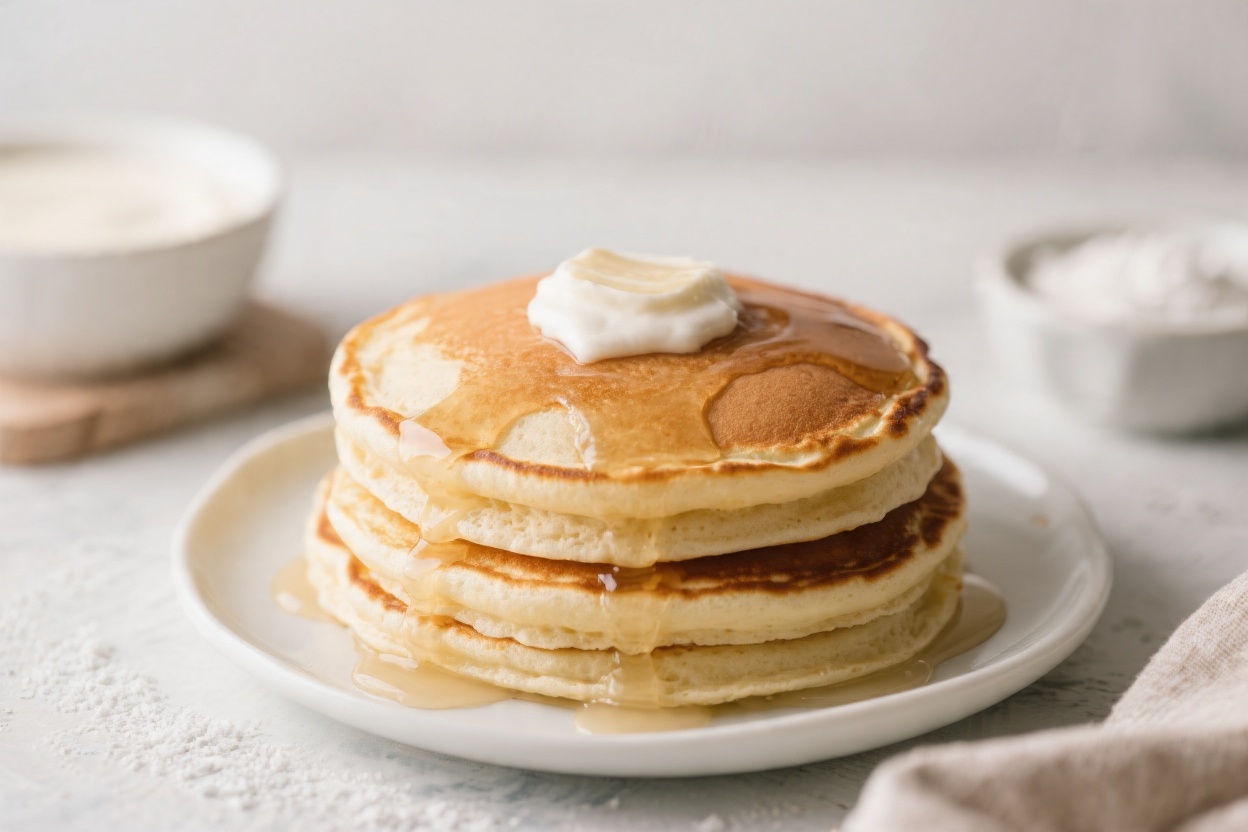
How to Make Bakery-Style Fluffy Pancakes at Home – Light, Tall, and Tender
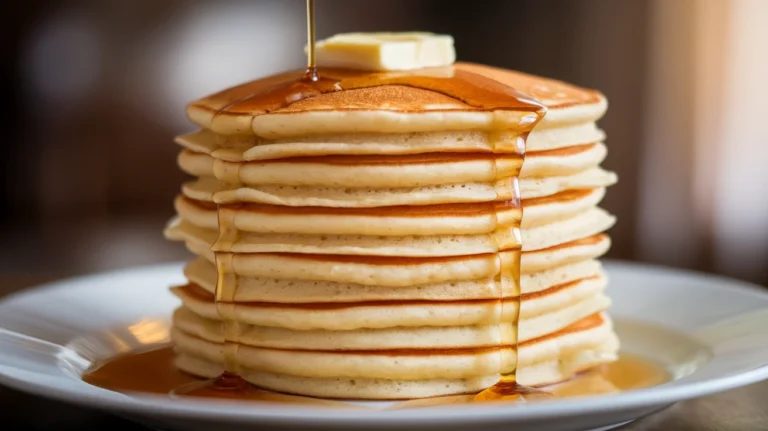
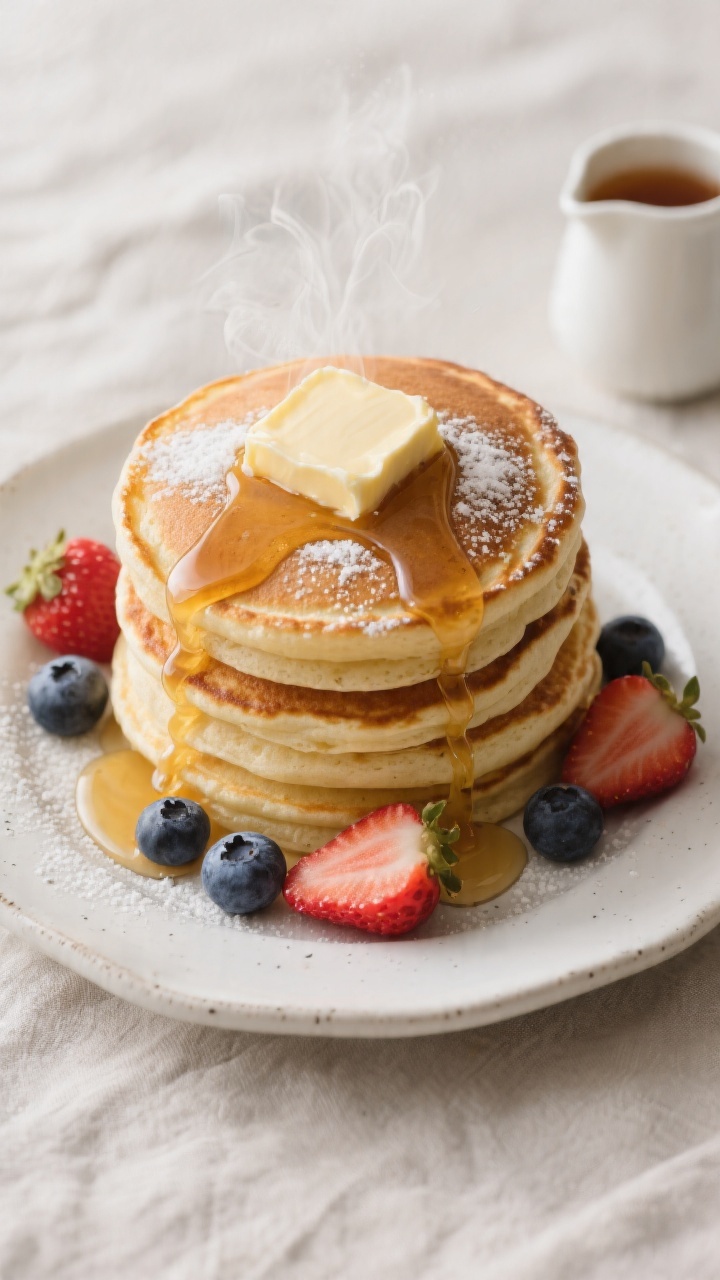
Think of the best pancakes you’ve had at a bakery: tall, soft, and cloud-like with a golden crust. You can absolutely make those at home without fancy equipment. The secret is in a few easy technique tweaks and the right ingredient ratios.
This recipe keeps things simple while giving you that signature rise and tender crumb. Follow along and you’ll have a stack that stays fluffy, not flat.
How to Make Bakery-Style Fluffy Pancakes at Home – Light, Tall, and Tender
Ingredients
- All-purpose flour
- Granulated sugar
- Baking powder
- Baking soda
- Kosher salt
- Buttermilk (or milk + lemon juice/vinegar as a substitute)
- Large eggs
- Unsalted butter (melted), plus more for the pan
- Vanilla extract
- Optional add-ins: chocolate chips, blueberries, lemon zest, cinnamon
- For serving: maple syrup, fresh fruit, whipped cream
Instructions
- Whisk dry ingredients: In a large bowl, whisk 2 cups all-purpose flour, 2 tablespoons sugar, 2 teaspoons baking powder, 1/2 teaspoon baking soda, and 1/2 teaspoon kosher salt. This spreads the leavening evenly so every bite lifts.
- Mix wet ingredients: In a separate bowl, whisk 1 3/4 cups buttermilk, 2 large eggs, 1/4 cup melted unsalted butter (slightly cooled), and 1 teaspoon vanilla. The butter adds richness without making the batter greasy.
- Combine gently: Pour the wet mixture into the dry. Stir with a spatula just until the flour streaks mostly disappear. Leave small lumps. Do not overmix or you’ll lose fluffiness.
- Rest the batter: Let the batter sit for 5–8 minutes. This hydrates the flour and lets the leavening start working. The batter should look thick and puffy.
- Preheat the pan: Heat a nonstick skillet or griddle over medium heat. Flick a few drops of water on the surface—if they dance and evaporate quickly, it’s ready. Lightly coat with butter.
- Portion the pancakes: Scoop about 1/3 cup batter per pancake. Don’t spread it thin; thick batter makes taller pancakes. Space them out so they don’t touch.
- Cook until bubbly: Let the pancakes cook undisturbed until bubbles form across the surface and the edges look set, 2–3 minutes. Adjust heat if they brown too fast.
- Flip once: Slide a thin spatula under the pancake and flip gently. Cook 1–2 minutes more until the underside is golden and the center springs back when tapped.
- Keep warm: Transfer to a 200°F (95°C) oven while you finish the batch. This keeps them fluffy without drying out.
- Serve right away: Top with a pat of butter and warm maple syrup. Add berries or a dusting of powdered sugar if you like.
What Makes This Recipe So Good
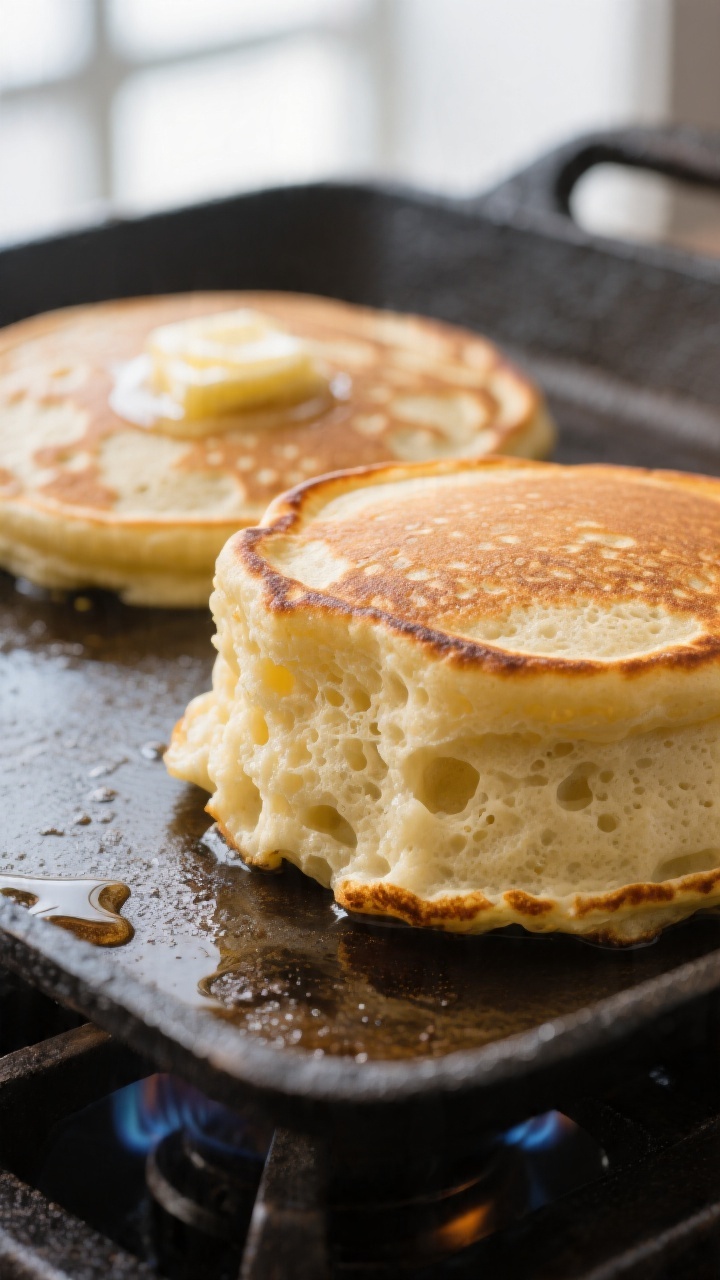
- Guaranteed lift: A balanced mix of baking powder and baking soda gives the pancakes a consistent rise and airy texture.
- Tender crumb: Buttermilk and melted butter add gentle tang and moisture so the pancakes stay soft, not dry.
- Bakery-style height: A thick batter and minimal mixing build structure that puffs beautifully on the griddle.
- Golden edges: A lightly buttered hot pan creates crisp edges with a fluffy interior.
- Make-ahead friendly: Dry mix can be prepped in advance, and pancakes reheat well without getting tough.
Shopping List
- All-purpose flour
- Granulated sugar
- Baking powder
- Baking soda
- Kosher salt
- Buttermilk (or milk + lemon juice/vinegar as a substitute)
- Large eggs
- Unsalted butter (melted), plus more for the pan
- Vanilla extract
- Optional add-ins: chocolate chips, blueberries, lemon zest, cinnamon
- For serving: maple syrup, fresh fruit, whipped cream
Instructions
- Whisk dry ingredients: In a large bowl, whisk 2 cups all-purpose flour, 2 tablespoons sugar, 2 teaspoons baking powder, 1/2 teaspoon baking soda, and 1/2 teaspoon kosher salt. This spreads the leavening evenly so every bite lifts.
- Mix wet ingredients: In a separate bowl, whisk 1 3/4 cups buttermilk, 2 large eggs, 1/4 cup melted unsalted butter (slightly cooled), and 1 teaspoon vanilla.
The butter adds richness without making the batter greasy.
- Combine gently: Pour the wet mixture into the dry. Stir with a spatula just until the flour streaks mostly disappear. Leave small lumps. Do not overmix or you’ll lose fluffiness.
- Rest the batter: Let the batter sit for 5–8 minutes.
This hydrates the flour and lets the leavening start working. The batter should look thick and puffy.
- Preheat the pan: Heat a nonstick skillet or griddle over medium heat. Flick a few drops of water on the surface—if they dance and evaporate quickly, it’s ready.
Lightly coat with butter.
- Portion the pancakes: Scoop about 1/3 cup batter per pancake. Don’t spread it thin; thick batter makes taller pancakes. Space them out so they don’t touch.
- Cook until bubbly: Let the pancakes cook undisturbed until bubbles form across the surface and the edges look set, 2–3 minutes.
Adjust heat if they brown too fast.
- Flip once: Slide a thin spatula under the pancake and flip gently. Cook 1–2 minutes more until the underside is golden and the center springs back when tapped.
- Keep warm: Transfer to a 200°F (95°C) oven while you finish the batch. This keeps them fluffy without drying out.
- Serve right away: Top with a pat of butter and warm maple syrup.
Add berries or a dusting of powdered sugar if you like.
How to Store
- Short-term: Refrigerate leftovers in an airtight container for up to 3 days. Separate layers with parchment to prevent sticking.
- Freeze: Cool completely, then freeze in a single layer on a sheet pan. Once solid, stack in a freezer bag for up to 2 months.
- Reheat: Toast on low in a toaster or warm in a 300°F (150°C) oven for 6–8 minutes.
For soft pancakes, cover and microwave in 15–20 second bursts.
- Avoid sogginess: Reheat straight from the fridge or freezer—don’t thaw on the counter.
Why This is Good for You
- Steady energy: The mix of carbohydrates and fat keeps you satisfied longer than sugary pastries alone.
- Protein boost: Eggs and dairy add protein. Serve with Greek yogurt or nut butter for extra staying power.
- Portion control: Making them at home helps you manage portion sizes and sugar amounts.
- Better ingredients: You control the add-ins—use whole wheat pastry flour for part of the flour, fold in berries, or swap some sugar for mashed banana.
Common Mistakes to Avoid
- Overmixing the batter: This develops gluten and makes pancakes tough. Stop as soon as the flour is mostly incorporated.
- Skipping the rest: Batter needs a few minutes to thicken and activate the leaveners for maximum lift.
- Cold, thick butter in the wet mix: If the butter is too hot, it can scramble eggs; too cold and it clumps.
Aim for warm but not hot.
- Wrong pan temperature: Too hot burns the outside while the center stays raw; too cool dries them out before browning. Medium heat is your friend.
- Pressing with the spatula: Don’t press after flipping. You’ll squeeze out the steam that makes them fluffy.
- Old leavening: Baking powder and soda lose strength over time.
Replace if older than 6–12 months.
Alternatives
- No buttermilk? Use 1 3/4 cups milk plus 1 1/2 tablespoons lemon juice or white vinegar. Let it sit 5 minutes to thicken.
- Dairy-free: Use almond or oat milk plus 1 1/2 tablespoons lemon juice, and swap melted butter for neutral oil or melted dairy-free butter.
- Gluten-free: Use a 1:1 gluten-free baking blend with xanthan gum. Let the batter rest a bit longer (10 minutes) for best texture.
- Whole-grain: Replace up to half the flour with whole wheat pastry flour.
Add a splash more buttermilk if the batter feels too thick.
- Flavor twists: Stir in lemon zest and blueberries; add cinnamon and a pinch of nutmeg; or fold in mini chocolate chips with a sprinkle of sea salt.
FAQ
How do I know when to flip the pancakes?
Look for bubbles across the surface that pop and leave small holes, and check that the edges look set and slightly matte. Gently lift a corner—if it’s deep golden, it’s ready to flip.
Why are my pancakes dense or gummy?
You likely overmixed or cooked on too low heat. Mix just until combined, rest the batter, and use medium heat so the centers cook through as the outsides brown.
Can I make the batter the night before?
It’s better to mix the dry and wet separately the night before, then combine in the morning.
If you must mix ahead, add the baking powder and soda right before cooking to keep the lift.
What’s the best pan to use?
A heavy nonstick skillet or a cast-iron griddle works best. They hold steady heat, which helps with even browning and a consistent rise.
How do I get perfectly round pancakes?
Use a 1/3 cup measuring scoop and pour the batter straight down from a few inches above the pan without moving the scoop. Let the batter spread on its own.
Can I reduce the sugar?
Yes.
You can cut the sugar to 1 tablespoon or even skip it. The texture stays fluffy; you’ll just rely more on toppings for sweetness.
How do I keep pancakes warm for a crowd?
Place cooked pancakes on a wire rack set over a sheet pan in a 200°F (95°C) oven. The rack prevents steam from making them soggy.
Why use both baking powder and baking soda?
Buttermilk is acidic, so baking soda reacts with it for immediate lift, while baking powder provides a second rise during cooking.
Together they create that bakery-style height.
Final Thoughts
Bakery-style pancakes aren’t about secret gadgets—they’re about simple, smart steps. Use fresh leavening, keep the batter thick, and resist the urge to overmix or rush the cook. With a hot, lightly buttered pan and a brief rest, you’ll get tall, tender pancakes every time.
Stack them high, pour on warm syrup, and enjoy that soft, fluffy bite you thought only bakeries could make.
Printable Recipe Card
Want just the essential recipe details without scrolling through the article? Get our printable recipe card with just the ingredients and instructions.