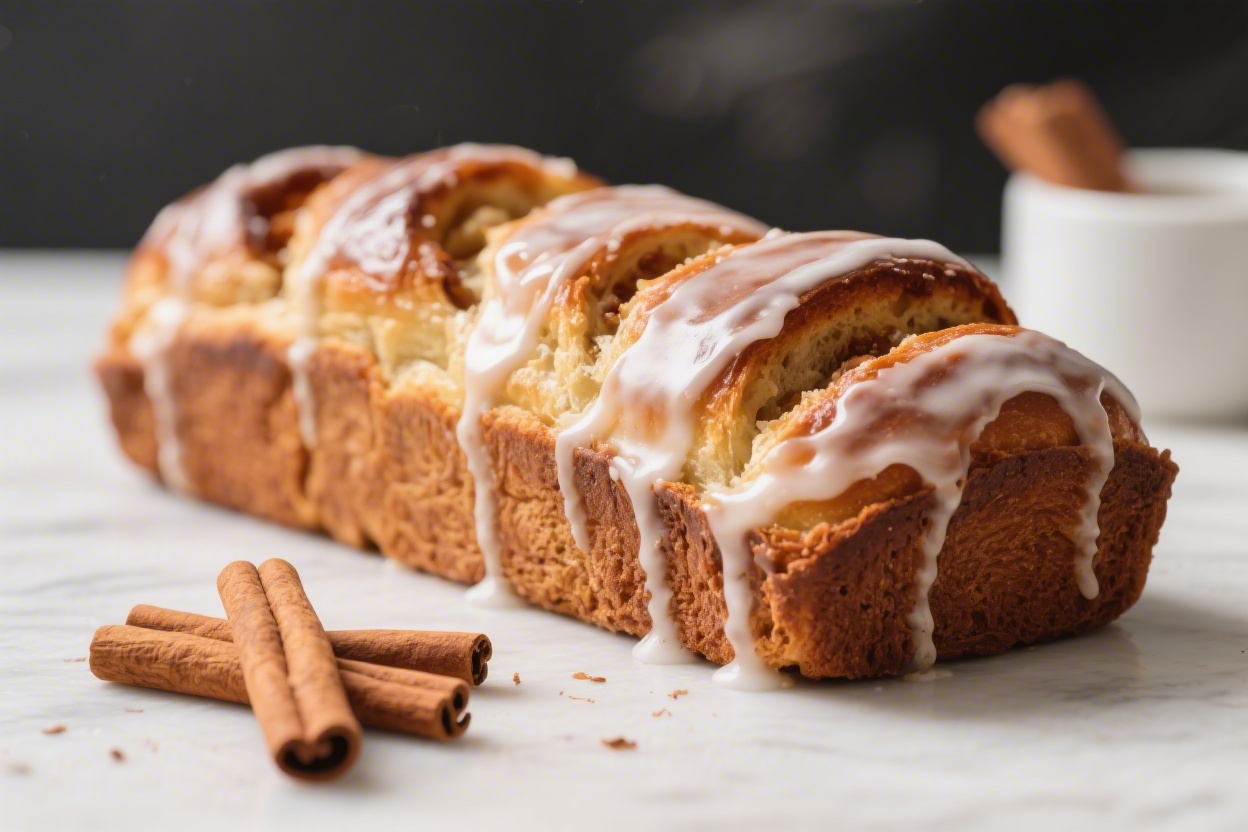
Sweet Glazed Cinnamon Bread That Tastes Like a Bakery – Soft, Swirled, and Irresistible
Warm, soft, and swirled with cinnamon sugar, this bread tastes like it came straight from your favorite bakery. It’s tender inside, golden on top, and finished with a glossy vanilla glaze that melts into every slice. The best part?
You can make it with simple pantry ingredients and a few easy techniques. Whether you serve it for brunch, a cozy afternoon treat, or a holiday breakfast, this loaf always disappears fast.

Sweet Glazed Cinnamon Bread That Tastes Like a Bakery - Soft, Swirled, and Irresistible
Ingredients
- All-purpose flour: 3 1/2 to 4 cups, spooned and leveled
- Granulated sugar: 1/3 cup for the dough + 1/2 cup for the filling
- Brown sugar: 1/4 cup for deeper flavor in the filling (optional but great)
- Ground cinnamon: 1 1/2 tablespoons
- Active dry yeast: 2 1/4 teaspoons (one standard packet)
- Whole milk: 1 cup, warmed to 105–110°F (40–43°C)
- Unsalted butter: 6 tablespoons softened for the dough + 3 tablespoons melted for the filling
- Large egg: 1, at room temperature
- Salt: 1 teaspoon
- Vanilla extract: 1 teaspoon for the dough + 1 teaspoon for the glaze
- Powdered sugar: 1 cup for the glaze
- Heavy cream or milk: 2–3 tablespoons for the glaze
- Neutral oil or butter: for greasing the bowl and loaf pan
Instructions
- Bloom the yeast. In a large bowl, combine warm milk and 1 tablespoon of the granulated sugar. Sprinkle the yeast over the top and let it sit for 5–10 minutes until foamy. If it doesn’t foam, your yeast may be expired or the milk too hot or cold.
- Mix the dough. Add the remaining granulated sugar, softened butter, egg, vanilla, and salt to the yeast mixture. Stir to combine. Add 3 1/2 cups of flour, one cup at a time, mixing until a shaggy dough forms.
- Knead until smooth. Turn the dough onto a lightly floured surface. Knead for 8–10 minutes, adding small sprinkles of flour only as needed, until the dough is smooth, soft, and slightly tacky but not sticky. Aim for a dough that springs back when pressed.
- First rise. Place the dough in a lightly oiled bowl, turning to coat. Cover with a towel or plastic wrap and let rise in a warm, draft-free spot for 60–90 minutes, or until doubled in size.
- Prep the filling. In a small bowl, mix the cinnamon, granulated sugar, and brown sugar. Melt the 3 tablespoons of butter and set aside. Grease a 9x5-inch loaf pan and line the long side with a parchment sling for easy removal.
- Roll it out. Punch down the dough and roll it into a 9x16-inch rectangle on a lightly floured surface. Brush the surface with melted butter, leaving a 1/2-inch border on one short side.
- Add the swirl. Sprinkle the cinnamon-sugar mixture evenly over the buttered dough. Gently press it in with your hands to help it stick.
- Shape the loaf. Starting from the short side opposite the clean border, roll the dough into a tight log. Pinch the seam to seal and tuck the ends slightly under. Place seam-side down in the prepared pan.
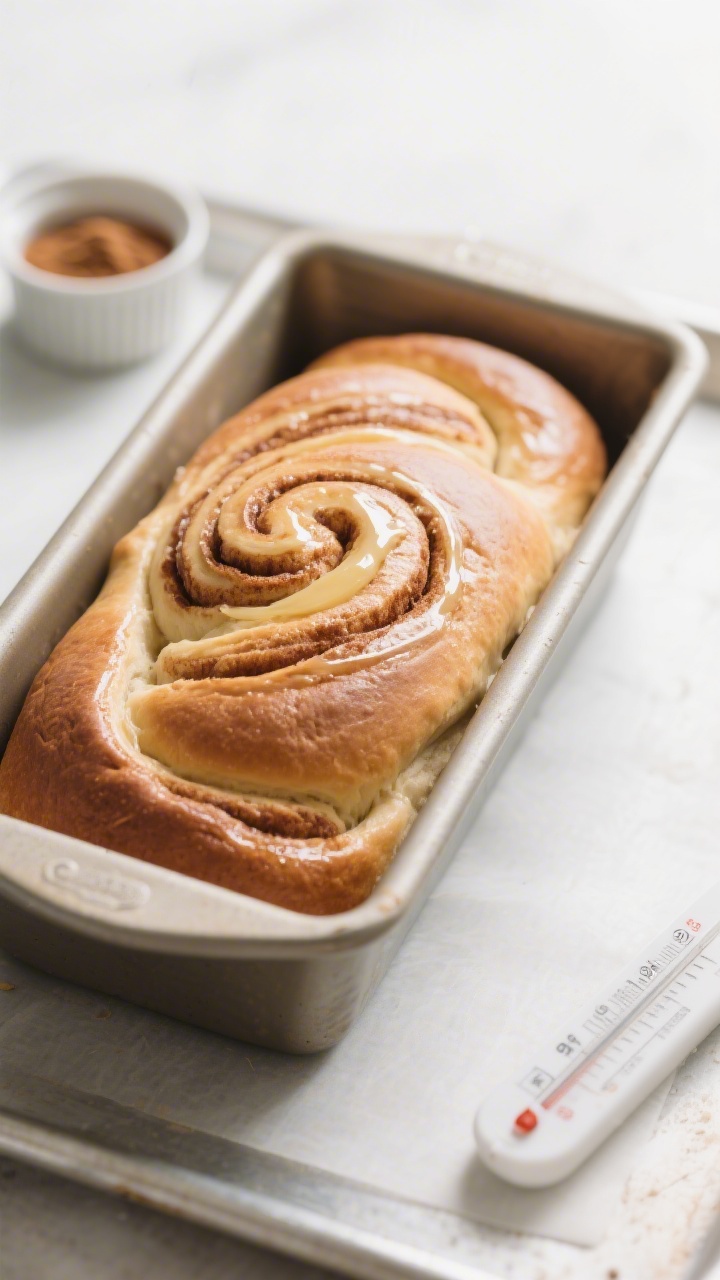
- Second rise. Cover the pan and let the dough rise again for 35–50 minutes, or until it crowns about 1 inch above the rim. Preheat the oven to 350°F (175°C) during this rise.
- Bake. Bake for 30–38 minutes, until the top is deep golden and the center registers around 190–195°F on an instant-read thermometer. If the top browns too quickly, tent loosely with foil for the last 10 minutes.
- Cool and glaze. Let the loaf cool in the pan for 10 minutes, then lift it out to a rack. Whisk powdered sugar, vanilla, and 2 tablespoons of milk or cream until smooth and pourable. Add more liquid if needed. While the bread is warm, drizzle the glaze over the top, letting it drip down the sides.
- Slice and serve. Cool at least 30 minutes before slicing so the swirl sets. Serve slightly warm for the best texture and aroma.
Why This Recipe Works
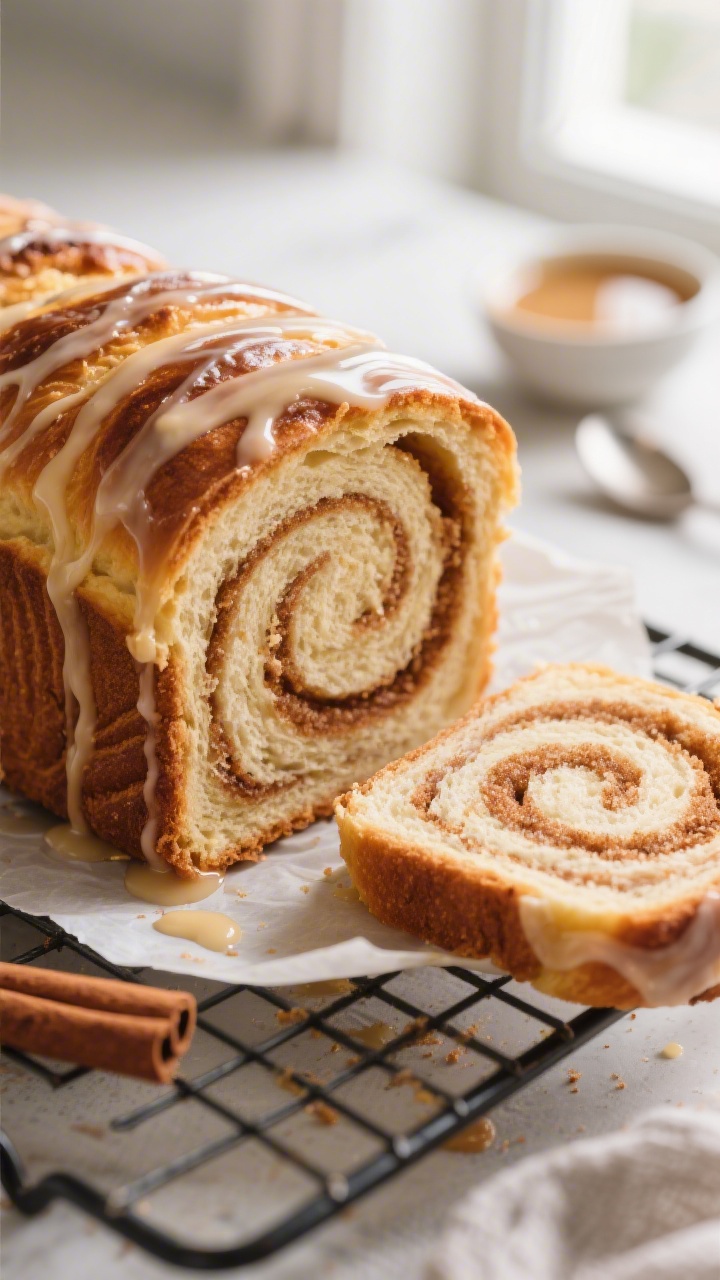
This recipe uses a rich, slightly sweet dough that stays soft thanks to milk, butter, and eggs. The dough is easy to handle and rises beautifully without being fussy.
A generous cinnamon-sugar swirl adds flavor and a pretty pattern in every slice. The glaze seals in moisture and gives that classic bakery shine. With clear steps and dependable ingredients, you’ll get consistent results—even if you’re new to baking with yeast.
What You’ll Need
- All-purpose flour: 3 1/2 to 4 cups, spooned and leveled
- Granulated sugar: 1/3 cup for the dough + 1/2 cup for the filling
- Brown sugar: 1/4 cup for deeper flavor in the filling (optional but great)
- Ground cinnamon: 1 1/2 tablespoons
- Active dry yeast: 2 1/4 teaspoons (one standard packet)
- Whole milk: 1 cup, warmed to 105–110°F (40–43°C)
- Unsalted butter: 6 tablespoons softened for the dough + 3 tablespoons melted for the filling
- Large egg: 1, at room temperature
- Salt: 1 teaspoon
- Vanilla extract: 1 teaspoon for the dough + 1 teaspoon for the glaze
- Powdered sugar: 1 cup for the glaze
- Heavy cream or milk: 2–3 tablespoons for the glaze
- Neutral oil or butter: for greasing the bowl and loaf pan
Step-by-Step Instructions
- Bloom the yeast. In a large bowl, combine warm milk and 1 tablespoon of the granulated sugar.
Sprinkle the yeast over the top and let it sit for 5–10 minutes until foamy. If it doesn’t foam, your yeast may be expired or the milk too hot or cold.
- Mix the dough. Add the remaining granulated sugar, softened butter, egg, vanilla, and salt to the yeast mixture. Stir to combine.
Add 3 1/2 cups of flour, one cup at a time, mixing until a shaggy dough forms.
- Knead until smooth. Turn the dough onto a lightly floured surface. Knead for 8–10 minutes, adding small sprinkles of flour only as needed, until the dough is smooth, soft, and slightly tacky but not sticky. Aim for a dough that springs back when pressed.
- First rise. Place the dough in a lightly oiled bowl, turning to coat.
Cover with a towel or plastic wrap and let rise in a warm, draft-free spot for 60–90 minutes, or until doubled in size.
- Prep the filling. In a small bowl, mix the cinnamon, granulated sugar, and brown sugar. Melt the 3 tablespoons of butter and set aside. Grease a 9×5-inch loaf pan and line the long side with a parchment sling for easy removal.
- Roll it out. Punch down the dough and roll it into a 9×16-inch rectangle on a lightly floured surface.
Brush the surface with melted butter, leaving a 1/2-inch border on one short side.
- Add the swirl. Sprinkle the cinnamon-sugar mixture evenly over the buttered dough. Gently press it in with your hands to help it stick.
- Shape the loaf. Starting from the short side opposite the clean border, roll the dough into a tight log. Pinch the seam to seal and tuck the ends slightly under.
Place seam-side down in the prepared pan.
- Second rise. Cover the pan and let the dough rise again for 35–50 minutes, or until it crowns about 1 inch above the rim. Preheat the oven to 350°F (175°C) during this rise.
- Bake. Bake for 30–38 minutes, until the top is deep golden and the center registers around 190–195°F on an instant-read thermometer. If the top browns too quickly, tent loosely with foil for the last 10 minutes.
- Cool and glaze. Let the loaf cool in the pan for 10 minutes, then lift it out to a rack.
Whisk powdered sugar, vanilla, and 2 tablespoons of milk or cream until smooth and pourable. Add more liquid if needed. While the bread is warm, drizzle the glaze over the top, letting it drip down the sides.
- Slice and serve. Cool at least 30 minutes before slicing so the swirl sets.
Serve slightly warm for the best texture and aroma.
Storage Instructions
Keep leftover bread in an airtight container at room temperature for up to 3 days. For longer storage, wrap the cooled loaf (or individual slices) tightly and freeze for up to 2 months. Thaw at room temperature, then warm slices in a low oven or toaster oven for a few minutes.
If the glaze absorbs during storage, add a light fresh drizzle before serving for that bakery look.
Benefits of This Recipe
- Bakery-style texture: A soft, rich crumb that stays tender for days.
- Approachable for beginners: Clear steps and flexible proof times.
- Pantry-friendly: Simple ingredients you probably have on hand.
- Versatile: Works as breakfast, snack, or dessert.
- Make-ahead friendly: Dough can be chilled overnight for convenience.
Pitfalls to Watch Out For
- Milk temperature: Too hot kills the yeast; too cold stalls the rise. Aim for 105–110°F.
- Too much flour: Over-flouring makes a dense loaf. The dough should be soft and slightly tacky.
- Loose shaping: A loose roll gives gaps and sugar tunnels.
Roll tightly and seal the seam well.
- Underbaking: A gooey center ruins the swirl. Check for 190–195°F in the middle or ensure the loaf sounds hollow when tapped.
- Cutting too soon: Slicing hot bread compresses the crumb. Let it rest so the structure sets.
Alternatives
- Overnight option: After shaping, cover and refrigerate the loaf overnight.
Bake straight from the fridge, adding a few extra minutes if needed.
- No-egg version: Replace the egg with 3 tablespoons milk or a flax egg. Texture will be slightly less rich but still soft.
- Different glazes: Swap vanilla for almond extract, orange zest, or maple syrup for a twist.
- Add-ins: Sprinkle 1/2 cup raisins or finely chopped toasted pecans over the filling before rolling.
- Whole wheat boost: Use 1 cup whole wheat flour and 2 1/2–3 cups all-purpose. Add 1 extra tablespoon milk if the dough feels stiff.
- Dairy-free: Use a rich plant milk and dairy-free butter.
The rise and crumb remain consistent.
FAQ
Can I use instant yeast instead of active dry yeast?
Yes. Use the same amount and skip the bloom step. Mix instant yeast directly with the flour and other dry ingredients, then add warm milk and proceed.
Rise times may shorten slightly, so keep an eye on the dough.
How do I know when the dough has been kneaded enough?
The dough should feel smooth, elastic, and slightly bouncy. When you stretch a small piece, it should thin without tearing immediately. If using a stand mixer, knead on medium-low for 6–8 minutes, checking often to avoid overmixing.
My swirl gaps or the sugar leaks.
What went wrong?
This usually means the roll was too loose or there was too much butter under the filling. Press the filling gently into the dough, roll tightly, and leave a clean border to seal the seam well. Avoid overloading the filling.
Can I bake this as rolls instead of a loaf?
Yes.
Roll the dough to 12×16 inches, fill, and slice into 12 even pieces. Arrange in a greased 9×13-inch pan, proof until puffy, and bake at 350°F for 20–25 minutes. Glaze while warm.
How do I prevent the top from over-browning?
Check at the 20-minute mark.
If the top is already dark, tent the loaf loosely with foil. Every oven runs a bit differently, so adjusting mid-bake is normal.
What if I don’t have a thermometer?
Bake until the loaf is a deep golden brown, the sides look set, and it sounds hollow when tapped on the bottom. If in doubt, give it 2–3 extra minutes; enriched doughs can handle a touch more time.
In Conclusion
This Sweet Glazed Cinnamon Bread brings true bakery flavor and texture to your kitchen with reliable steps and everyday ingredients.
The soft crumb, fragrant swirl, and glossy vanilla finish make it special enough for guests but easy enough for a weekday bake. Once you try it, you’ll keep the recipe close—because warm slices of cinnamon bread never last long.
Printable Recipe Card
Want just the essential recipe details without scrolling through the article? Get our printable recipe card with just the ingredients and instructions.